
How to Select the
Right HVAC Damper Actuator?
Interactive HVAC Damper Actuator Sizing Table
Use this educational calculator to estimate damper area, air velocity, torque loading, and a minimum actuator torque range. Always confirm final actuator selection with damper manufacturer torque data and the project sequence of operation.
Review B Series or higher torque range
This estimate suggests selecting an actuator above the calculated requirement. Confirm the final model using voltage, control signal, fail-safe requirements, runtime, shaft compatibility, accessories, and damper manufacturer data.
| Calculation step | Result | Selection note |
|---|
Torque factors are educational estimates for early selection only and are adapted from commonly used damper actuator sizing methods. Actual torque depends on damper construction, seals, age, linkage, airflow, static pressure, installation condition, and manufacturer data.
How to Select the Right HVAC Damper Actuator?
To select the right HVAC damper actuator, calculate the damper area, identify the damper blade type, confirm whether the damper has seals, estimate the required torque, add a safety margin, and then match the actuator to the control signal, voltage, runtime, fail-safe requirement, shaft size, and installation conditions.
The actuator must be strong enough to move the damper reliably under real operating conditions, not just under ideal conditions.
Quick selection checklist
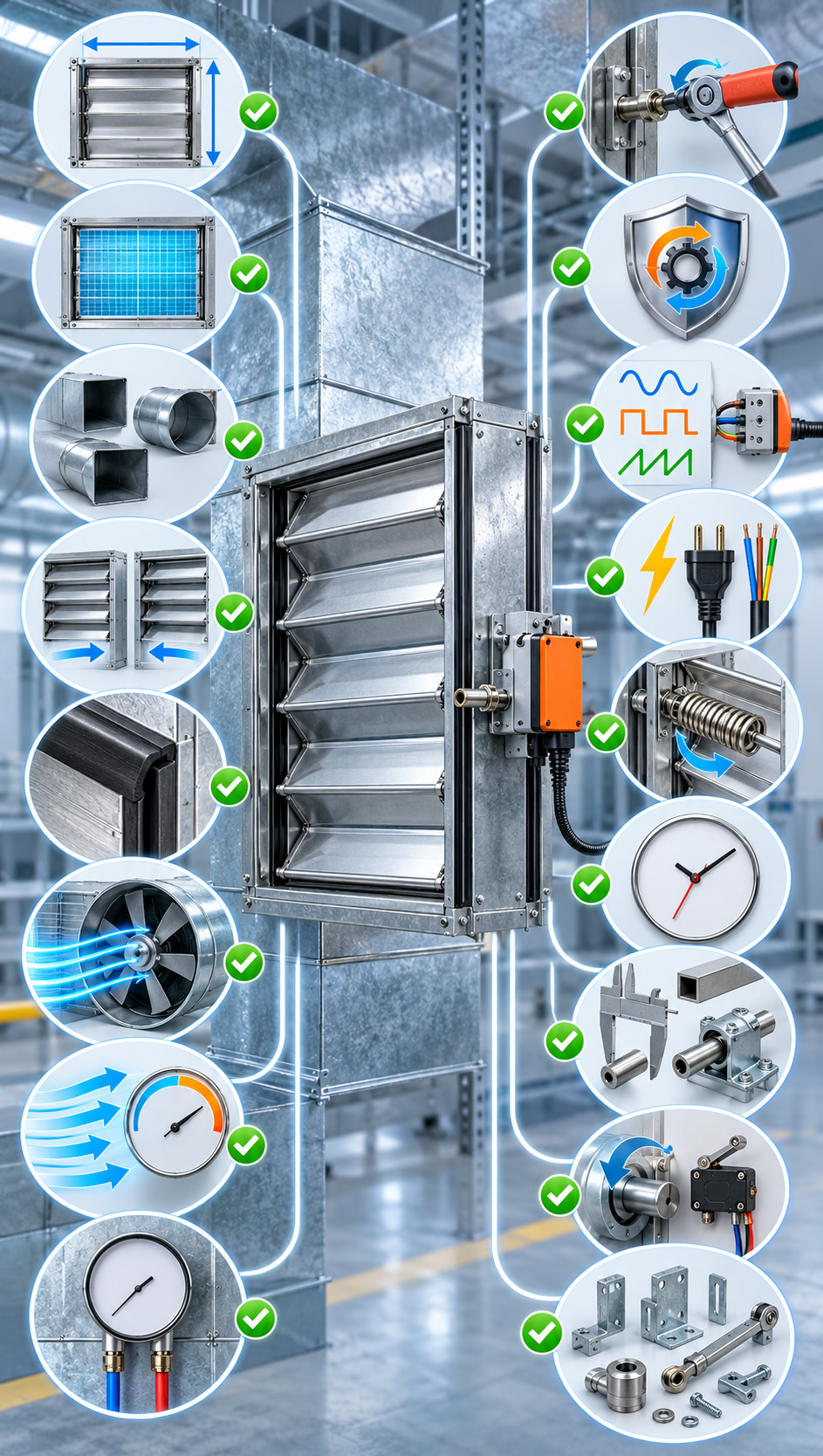
Before selecting an HVAC damper actuator, confirm:
- Damper size
- Damper area
- Damper shape
- Blade type
- Edge or blade seals
- Airflow in CFM
- Air velocity in FPM
- Static pressure
- Required torque
- Safety factor
- Control signal
- Power supply voltage
- Fail-safe requirement
- Runtime requirement
- Shaft size and mounting method
- Feedback or auxiliary switch requirements
- Accessories or brackets
What is an HVAC damper actuator?
An HVAC damper actuator is a motorized device that opens, closes, or modulates an air damper.
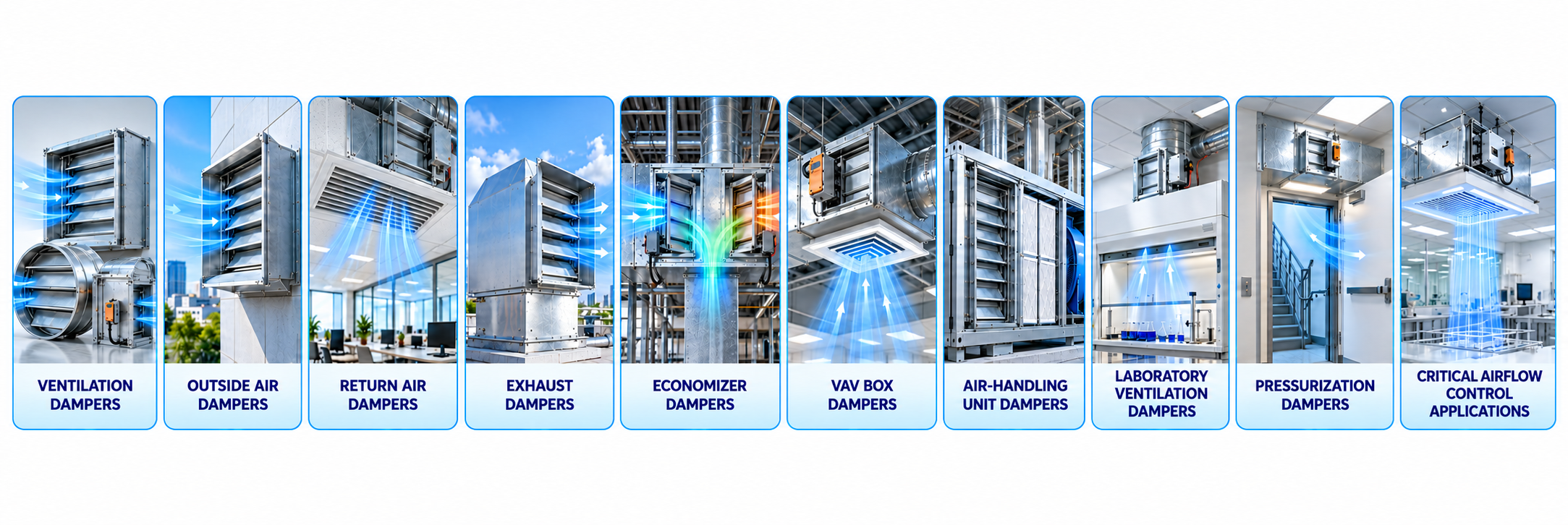
It receives a signal from a controller or building automation system and converts that signal into mechanical rotation. This allows the HVAC system to control airflow through dampers in ducts, air-handling units, outside air intakes, return air sections, exhaust systems, and zone control applications.
Damper actuators are commonly used for:
Why actuator selection matters
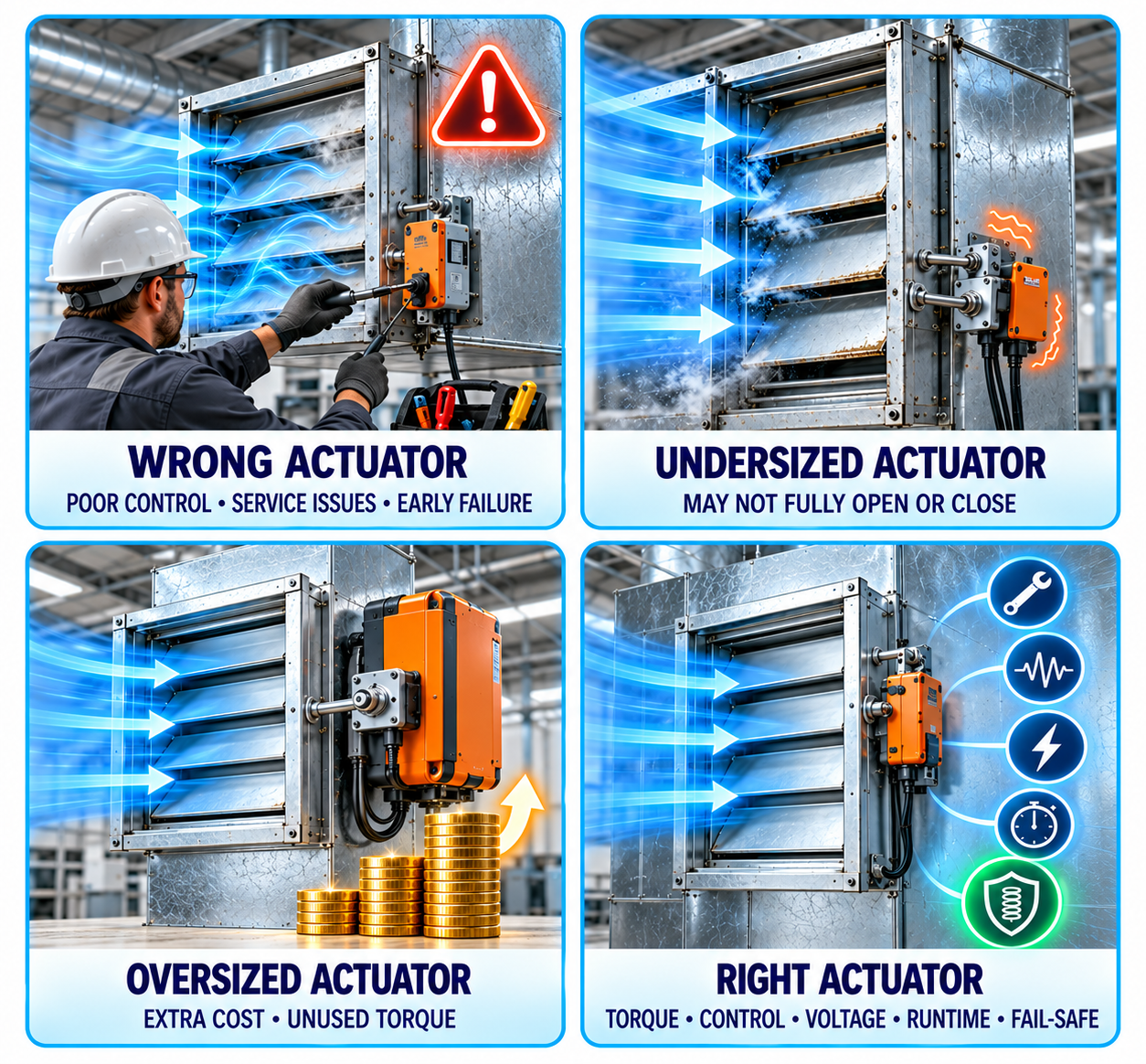
Selecting the wrong actuator can cause poor airflow control, commissioning issues, unnecessary service calls, and premature actuator failure.
An undersized actuator may not fully open or close the damper. It may also struggle against blade resistance, seals, static pressure, or aging damper components.
An oversized actuator may work, but it can increase cost unnecessarily if the extra torque is not required.
The goal is to select an actuator with enough torque, the correct control type, proper voltage, suitable runtime, and the right fail-safe function for the application.Final answer
The right HVAC damper actuator is selected by matching the actuator to the damper load and the control sequence.
Start with damper area, blade type, seals, and airflow. Use these to estimate torque, then add a safety margin. After that, confirm the control signal, voltage, fail-safe function, runtime, shaft compatibility, and accessory requirements.
For critical or high-torque applications, always verify the damper manufacturer’s torque data and consult the project specifications before selecting the final actuator.


Contact
Head Office
National Environmental Products Ltd.
Neptronic
400 Boulevard Lebeau
Montréal (Québec) H4N 1R6 Canada
E-mail: contact@neptronic.com
Copyright © 2026 Neptronic. All rights reserved.
